A Gentlemen’s Agreement: Newfoundland and the Struggle for Transatlantic Air Supremacy
By Robert C. Stone
Boulder Publications, 2015
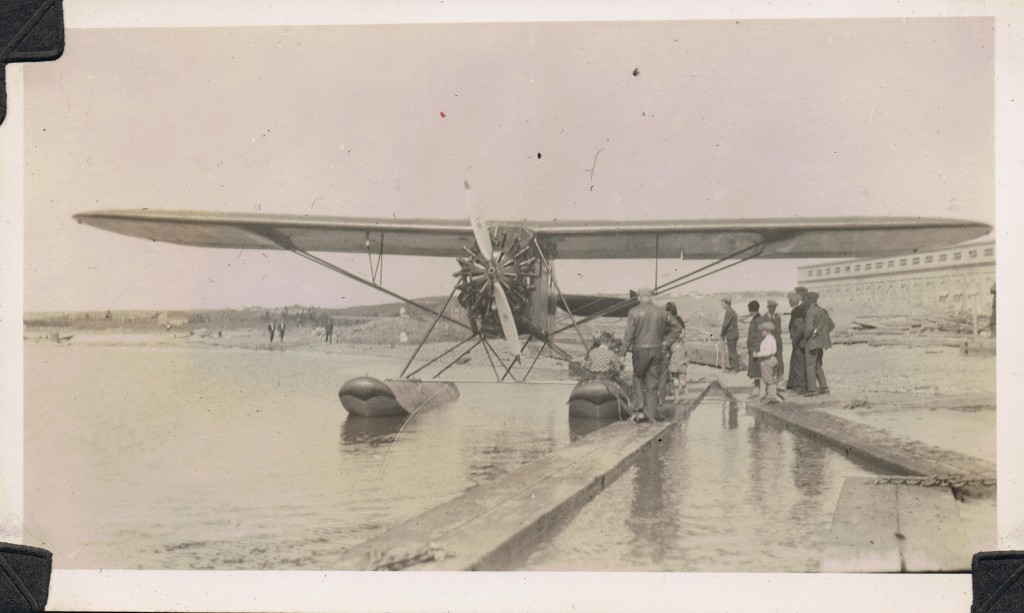
Unknown aircraft in Deer Lake. If you know it, please comment. From the Bragg Family Collection.
Reading Newfoundland political histories makes me think that Newfoundland always finds herself in the same situation; being sold off so a bigger power gets something and electing politicians who seem more concerned about the merchant class instead of long-term planning. In this case, the United Kingdom looking for benefits from the United States and making sure Canada doesn’t get a foothold in Newfoundland. Because of this, I’m not sure that the title of this book adequately describes the contents. It is more about the United States, Britain, Germany and Canada trying to establish airlines or military air supremacy with Newfoundland trying to work out her own financial and political problems while being geographically important to the other players.
That said, it is an interesting read, and any aviation buff should pick this up and read it. It is just not as Newfoundland centered as I would have hoped.
The main focus is certainly aviation within the context of early aviation, the First World War, the excitement of the 20s and the economic hardships of the 30s. It is very much a world view discussing the key players and their roles, with almost asides as to what is happening in Newfoundland at the time. I found that often the discussion of Newfoundland was stunted by the greater figures that helped shape aviation, such as Lindberg’s exploits, whether they were in Newfoundland or elsewhere. In fact, I often found some of the aviation happenings were only lightly touched on. For instance, in discussing the Great Atlantic Air Race, Stone mentioned all of the key aviators who were in Newfoundland, but didn’t discuss on some of their difficulties in trying to compete in the air race. For instance, those who were in St. John’s had difficulty finding locations to use as runways because many of the farmers who had flat land decided to inflate the rent to the aviators for the land use. The omission that bothered me the most was that Stone says:
Hawker and Grieve took off in the afternoon, intending to follow major shipping lanes in case they were forced to land on the ocean. But by the next day, no news had been received and, following two days of fruitless searching, it seemed obvious their plane had crashed and been lost (50).
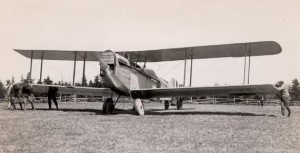
Sopwith Atlantic Biplane Flown by Hawker and Mackenzie-Grieve, 1919. From Heritage Newfoundland and Labrador
Stone does not follow through with this in saying that Hawker and Grieve were rescued by a ship that had no wireless, so notification did not happen until they were within sight of land. The ship then signaled that Hawker and Grieve survived and they were dropped off in Scotland. The author’s omission would lead readers to believe that they died on the attempt. While many had died in attempting trans-Atlantic crossings, Hawker and Grieve survived their attempt (Will 2008). Similarly, on the world stage, the first trans-Atlantic crossing by a female was a fit of a media sensation, and again turned eyes on Newfoundland. Amelia Earhart was not the only female ready to be transported across, and this is omitted as the author is keeping is focus on the financial difficulties the world was facing. I would think that these events would be of importance when discussing Newfoundland and air supremacy.
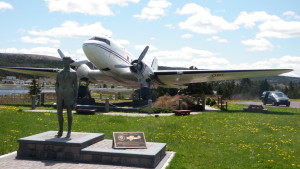
Amelia Earhart monument in Harbour Grace.
These comments may just come down to a difference in opinion for how to present aviation in Newfoundland while the world was trying to establish trans-Atlantic routes. Personally, I have been trying to look more at the average people involved in aviation history, but this text looks more to the big players and the major political decisions. Both are important areas for focus, but I guess the way the synopsis was worded this was going to be a little more Newfoundland centered. Stone focuses on the political players and often follows them around the world while touching on Newfoundland and aviation. He also follows the turbulent political events happening in Newfoundland in the 1930s, which is certainly interesting in their own right, but the focus of the last of Squires’ term takes away from the politics of aviation at the time.
The book really comes together at the end and Stone begins to bring everything together. Instead of looking at every small international player, Stone begins to focus on Newfoundland politics and Newfoundland’s role in aviation. Instead of staying strictly chronological, the author begins to introduce people are their story becomes important. This allows the reader to better keep track of the players at they are relevant instead of trying to remember someone mentioned a couple of chapters previous.
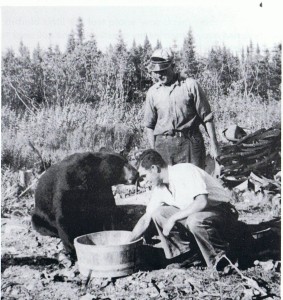
Construction at the Gander airfield. From Snow 2000.
As I have said, it is an interesting read and I would suggest it to anyone interested in aviation, but it does leave me with a number of questions. In all honesty, I will need to read this book again in the future and take more detailed notes so that I can see if I can find answers to some of those questions. I will look through the references when it comes to future research, and believe that this book is a great starting place for research into early aviation in general and Newfoundland’s role in the world’s “struggle for transatlantic air supremacy”.
Citations:
Snow, Jacqueline Chantal
2000 Gander, From Past to Present: Personal Stories of the Military in Gander, Newfoundland. The Gander & Area Laubach Literacy Council, Inc.: Gander.
Stone, Robert C.
2015 A Gentlemen’s Agreement: Newfoundland and the Struggle for Transatlantic Air Supremacy. Boulder Publications: Portugal Cove-St. Philip’s.
Will, Gavin
2008 The Big Hop: The North Atlantic Air Race. Boulder Publications: Portugal Cove-St. Philip’s.