Book review

All posts tagged Book review

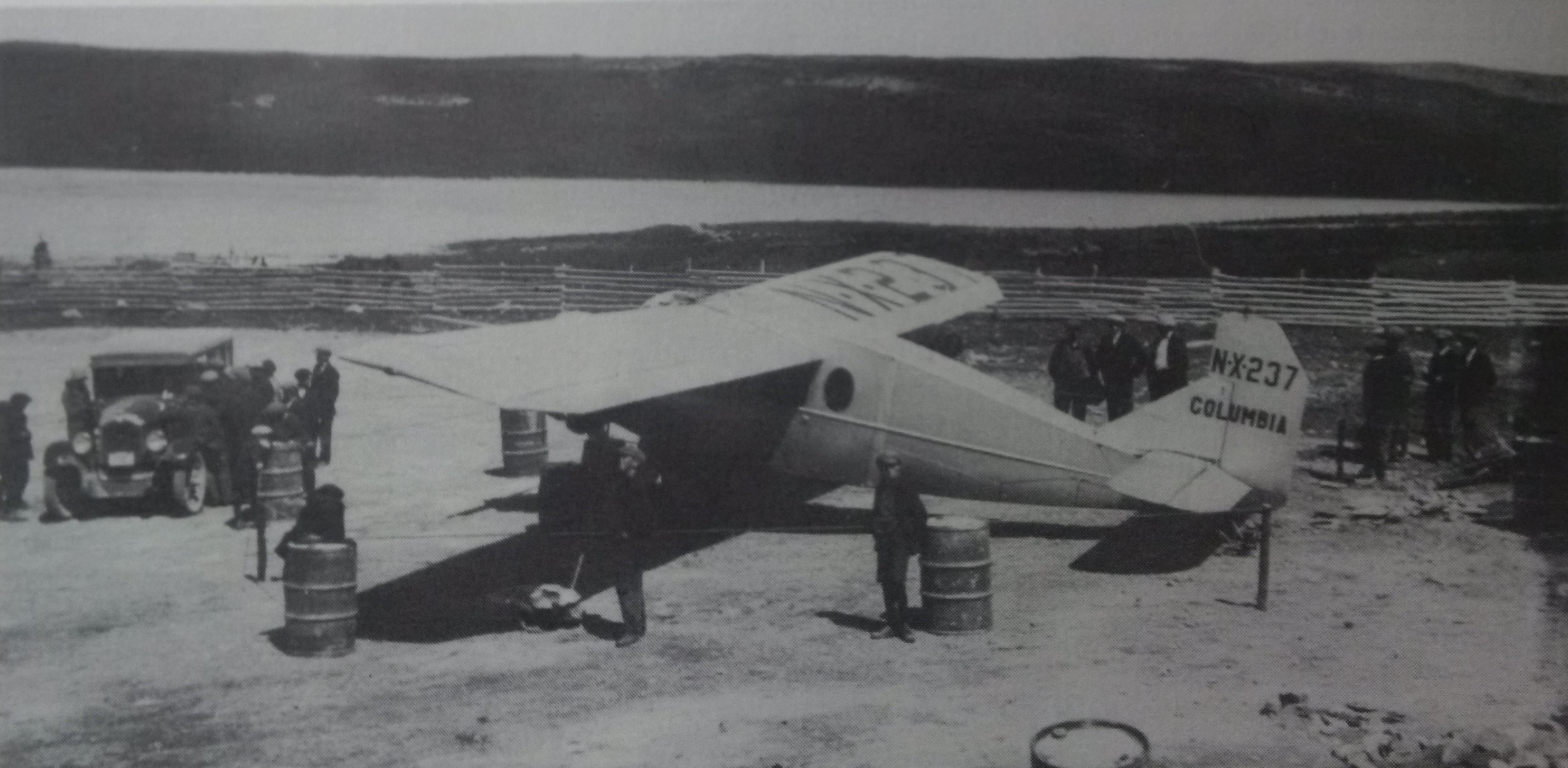
Boyd and Conners with the Columbia in Harbour Grace in September 1930. Parsons and Bowman 1983, 66.

Boyd and Conners with the Columbia in Harbour Grace in September 1930. Parsons and Bowman 1983, 66.

On September 28th [1930] they [Captain Errol Boyd of the Royal Air Force and Lieutenant Harry P. Connor of the U.S. Naval Reserve in the monoplane The Columbia] flew low over St. John’s and dropped a message in a cigarette can. The message, addressed to J.M. Barbour, Superintendent of the Anglo-American telegraph company, was picked up by a young man named Kent who delivered it to Barbour. The message read: “Saying hello to everybody in St. John’s. Sorry we can’t land. Bet there are some beautiful girls there! Many thanks for your cooperation on this flight. Boyd and Connors” (65-6).
51Heo0Oi52L._SY422_BO1,204,203,200_

The most prominent thing about The Challenge of the Atlantic: A Photo-illustrated History of Early Aviation in Harbour Grace, Newfoundland by Bill Parsons and Bill Bowman are the beautiful pictures of Harbour Grace. After this, are the wonderfully personal stories associated with the history of the aircraft that stopped in Harbour Grace. The pictures were taken by Reuben and Bill Parsons, and between them, they captured some of the most important aviation moments in Harbour Grace’s history, and everyday life in the town. The pictures of Harbour Grace put the airfield within the context of the community; a town that is one of the oldest in Newfoundland, has a rich fishing, shipping and ship building history, and even served as the capitol of Newfoundland for a period. With such a varied history, it seems reasonable that Harbour Grace would expand their view and form the Harbour Grace Airport Trust Company in 1927.
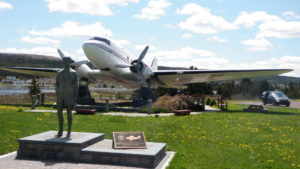
The Pride of Harbour Grace aviation monument. Photo by author 2010.

The Spirit of Harbour Grace aviation monument. Photo by author 2012. This DC-3 was the last one flown by Royal Cooper.

The interest in aviation was perhaps sparked by the Atlantic Air Race as one of the crews planning to attempt the crossing, lead by Rear Admiral Sir Mark Kerr, set up in Harbour Grace. The airstrip for the attempt was located where St. Francis High School now stands and ran parallel with Water Street, between the railway and the harbour. Kerr’s Handley Page Atlantic never attempted the crossing from Harbour Grace, but did make a test flight to St. John’s in 25 minutes. Before the attempt could be made, Alcock and Whitten-Brown made their successful crossing and the crew of the Handley Page decided to make an attempt from New York instead of Harbour Grace. It never made that attempt either.
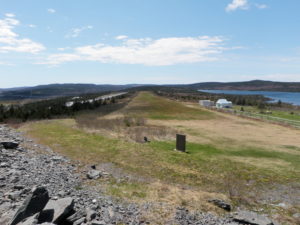
Harbour Grace Airfield. Photo by author 2010.

Harbour Grace Airfield. Photo by author 2010.

The airstrip was constructed through the financing of the 21 member committee, a grant from the Newfoundland Government, and with the help of T.A. Hall (government engineer who was also involved in determining the location of the Gander Airport) and R.H.K. Cochius (available from the Highroads Commission for technical advice). The airstrip took only a month to build, and is located near Lady Lake, to the south of Harbour Grace. According to the crew of The Pride of Detroit, the airstrip was one of the finest they had ever seen. Mabel Boll, who was in Harbour Grace in an attempt to be the first woman to cross the Atlantic (Amelia Earhart left Trepassey on a successful flight two days after Boll’s arrival in Newfoundland), donated $500 to the president of the airport toward further development “of what was considered to be a thoroughly efficient airport service” (42).
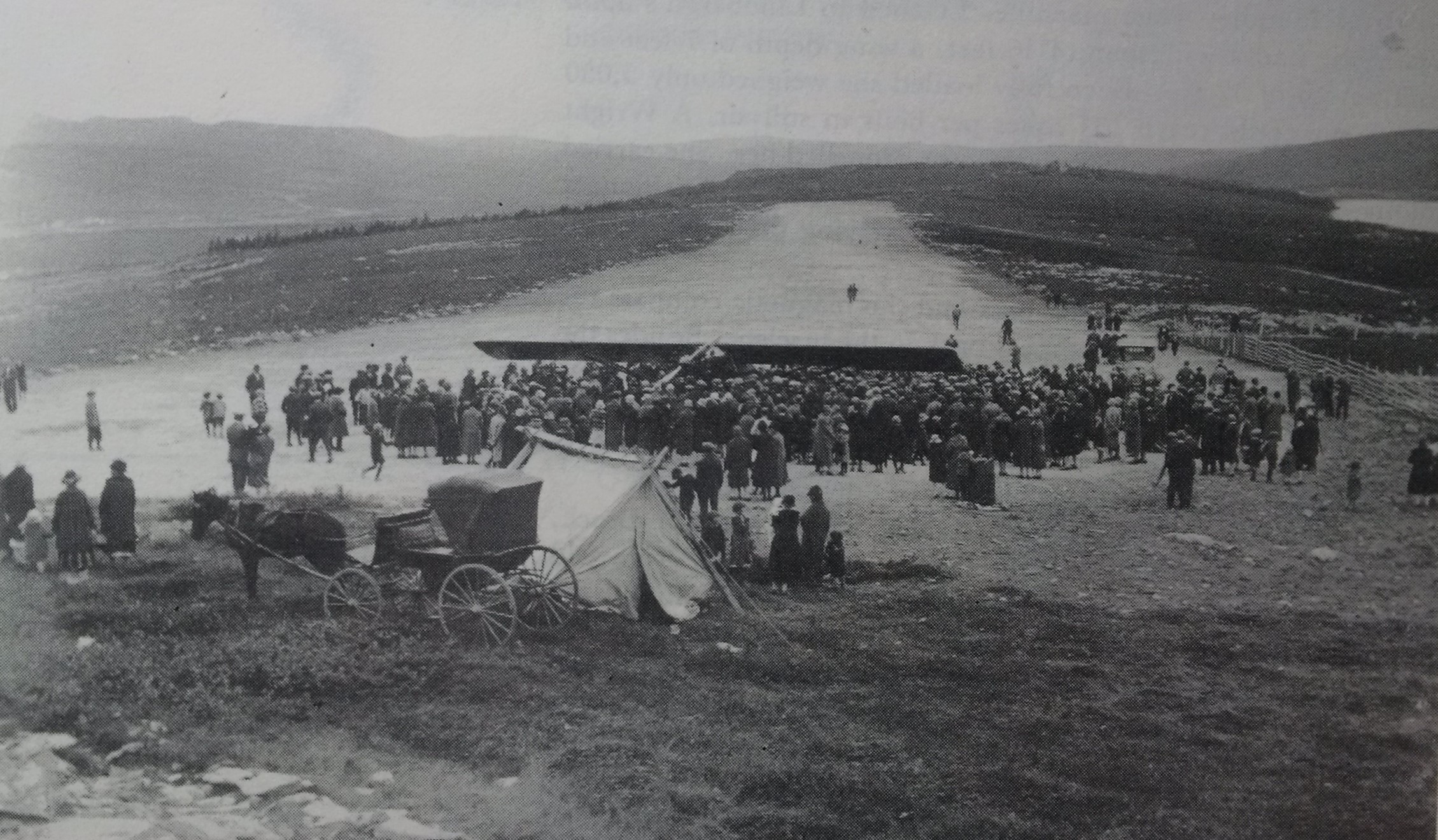
The Pride of Detroit, the first aircraft to use the Harbour Grace Runway, landing on 26 August 1927. Parsons and Bowman 1983, 24.

The Pride of Detroit, the first aircraft to use the Harbour Grace airstrip, landing on 26 August 1927. Parsons and Bowman 1983, 24.

After the above history about the airstrip, the book focuses on the individual aviators (and aircraft) that passed through Harbour Grace. The histories talk about failed and successful trans-Atlantic crossing (sometimes attempts at around the world flights). In 1927 alone, some twenty trans-oceanic flyers had been lost leaving North America to cross the Atlantic (27). Each section talks about the aircraft, the aviators, and their fate as they leave Newfoundland (whether they were successful in their attempt, did not attempt and where they went after Harbour Grace), and other interesting notes of history. Inside this book is a great deal of information, coupled with beautiful and rare pictures.

Wiley Post and Harold Gatty with the Winnie Mae in Harbour Grace on 23 June 1931. Parsons and Bowman 1983, 72.

Wiley Post and Harold Gatty with the Winnie Mae in Harbour Grace on 23 June 1931. Parsons and Bowman 1983, 72. Wiley Post is a well-know Alberta aviator, and is prominently featured in the Alberta Aviation Museum.

My biggest complaint with this book is the lack of captions on the pictures. I don’t know which pictures were taken by Bill and which were taken by Reuben. Of course, the years on the pictures would give a good indication, but cannot be credited with certainty. As well, some of the pictures have locations and people identified, and others don’t. Of course, there are many pictures that clearly show the name of the aircraft in the picture, or a recognisable face, such as Amelia Earhart, but captions also help give quick points of reference instead of always needing to read the associated article for details such as the aircraft, pilot (and crew), and date.
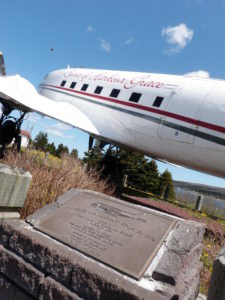
The Pride of Harbour Grace. Photo by author 2010.

The Spirit of Harbour Grace. Photo by author 2010.

Source

Parsons, B. and B. Bowman
1983      The Challenge of the Atlantic: A Photo-Illustrated History of Early Aviation in Harbour Grace, Nfld. Robinson-Blackmore Book Publishers: Newfoundland.

First published on 24 November 2013

At the end of this post I mention a radar system Fales’ crew were involved in testing. So far I have yet to discover if it is the same as the one found on a crash site in Gander (more about that crash on my Land and Sea episode or Deal 2008 or Deal, Daly & Mathias 2015). On to the post…


I did make an interesting discovery today: http://airportcoffeeshop.blogspot.ca/. This came to my attention via academia.edu when I noticed someone found my page from the blog. After glancing through the blog, there are some very interesting aviation links, and a great way to keep updated on the goings on at GIAA.

Flight from Gander

I picked up Flight From Gander: On Board A B-24 in the C.B.I. by Staff Sgt. Al Fales, WWII Radio Operator, 493rd Bomb Sqdn. primarily based on the title. Without reading anything but Flight From Gander, I thought the book would be about Gander, Newfoundland. Turns out, Michigan was also (still is?) referred to as Michigander, and because that is where Fales and his crew initially flew out of, the book is called Flight From Gander. But, all is not lost when it comes to it being a resource for Newfoundland aviation history. Fales and his crew did fly from Gander to the Azores on their way to overseas.

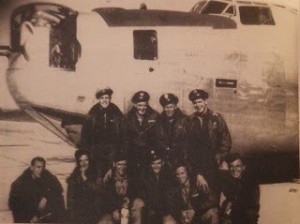
Fales (front row, 2nd from the right) and his crew. Fales 2007

Fales (front row, 2nd from the right) and his crew. Fales 2007

Fales describes Gander is “colder than Scrooges [sic] heart” and learned what they needed cold weather gear for as they landed on the ice and snow covered runways. They were actually delayed for two days due to the runways being too slippery after a cold weather system moved through.  While waiting, Fales enjoyed the high calorie meals provided, and between those and the winter suits, were quite comfortable during their stay.

Fales talks about how many aircraft were decorated with images of their women back home. Fales 2007.

Fales talks about how many aircraft were decorated with images of their women back home. Fales 2007.

Most interestingly is how Fales remembers the little details. To leave Gander, the engines had to be heated because the cold weather would make the oil in the radials of the engine slow and difficult to pour. Trying to use the engines in that state would make them stiff, overheat the starters and drag on the batteries. So, big fan forced oil heaters were used and long flexible ducts were used to warm the engines enough that they would start. They were heated for about a half hour, then they started each engine in turn, giving each one time to cough, sputter, and “belching smoke like a cold diesel engine” before “settling into a smooth rumble”. The propellers “fanned a cloud of snow across the field as the engines were run up” and once they were at full power, the B-24 took off from Gander.

Fales and others on their way home. Fales 2007.

Fales and others on their way home. Fales 2007.

This is just an example of the detail used by Fales in his book. He tends to focus on what would typically be considered the mundane; the food, the Postal Exchange, his crew mates, and people that he met when out on pass. Fales’ book a great look into the lives of servicemen in the USAAF and focuses the day-to-day operations and activities, something which is often lacking in memoirs. While I was disappointed in the lack of talk about Newfoundland (especially when I was expecting the book to focus on Gander, Newfoundland), Flight from Gander is still a great source to know what the lives of those passing through Gander were like. Certainly there would be big differences between being stationed in in US or overseas than in Gander, mostly because Gander was so isolated and passes to go to Grand Falls or Corner Brook were less frequent than passes to go into “town” when stationed somewhere a little closer to the nearest community. One thing in the book that I do need to research further is a reference near the end of the book (and the end of the war) of an experimental flight the author was involved with. Well, the flight wasn’t experimental, but the radar on the aircraft was. The aircraft looked a little different, with the bottom turret removed and a “cream colored plastic tub that could be raised and lowered” in its place. It was a special radar that they were to use along the coast of Burma which proved that radar could be mobile and effective. I would need to do more research, but the first site I worked on in Gander involved a USAAF B-24 which was carrying a top secret radar and the aircraft carrying it were designated “Eagle”. Unfortunately, as I worked on this one, it did end tragically, with a crash at it was flying into Gander on 14 February 1945, killing all 10 men on board. When I look into it a little more I will see if I can figure out if this is the same radar system.

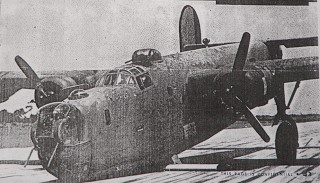
An image of a B-24 carrying the radar system. On this image, you can see a long beam under the aircraft. This was one portion of the radar. From Masters 1945.

An image of a B-24 carrying the radar system. On this image, you can see a long beam under the aircraft. This was one portion of the radar. From Masters 1945.

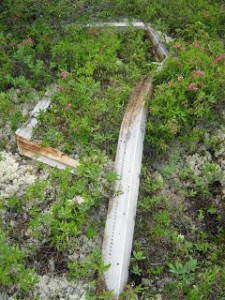
Part of the APQ-7 radar system found in Gander, Newfoundland. Photo by Lisa M. Daly.

Part of the APQ-7 radar system found in Gander, Newfoundland. Photo by Lisa M. Daly.

 References:

Fales, Al. 2007
Flight From Gander: On Board a B-24 In The C.B.I. Xlibris: USA.

Masters, D.
1945       The Eagle Strikes. It Paid Off at War’s End. RADAR (11):36-45.