Aviation

All posts tagged Aviation

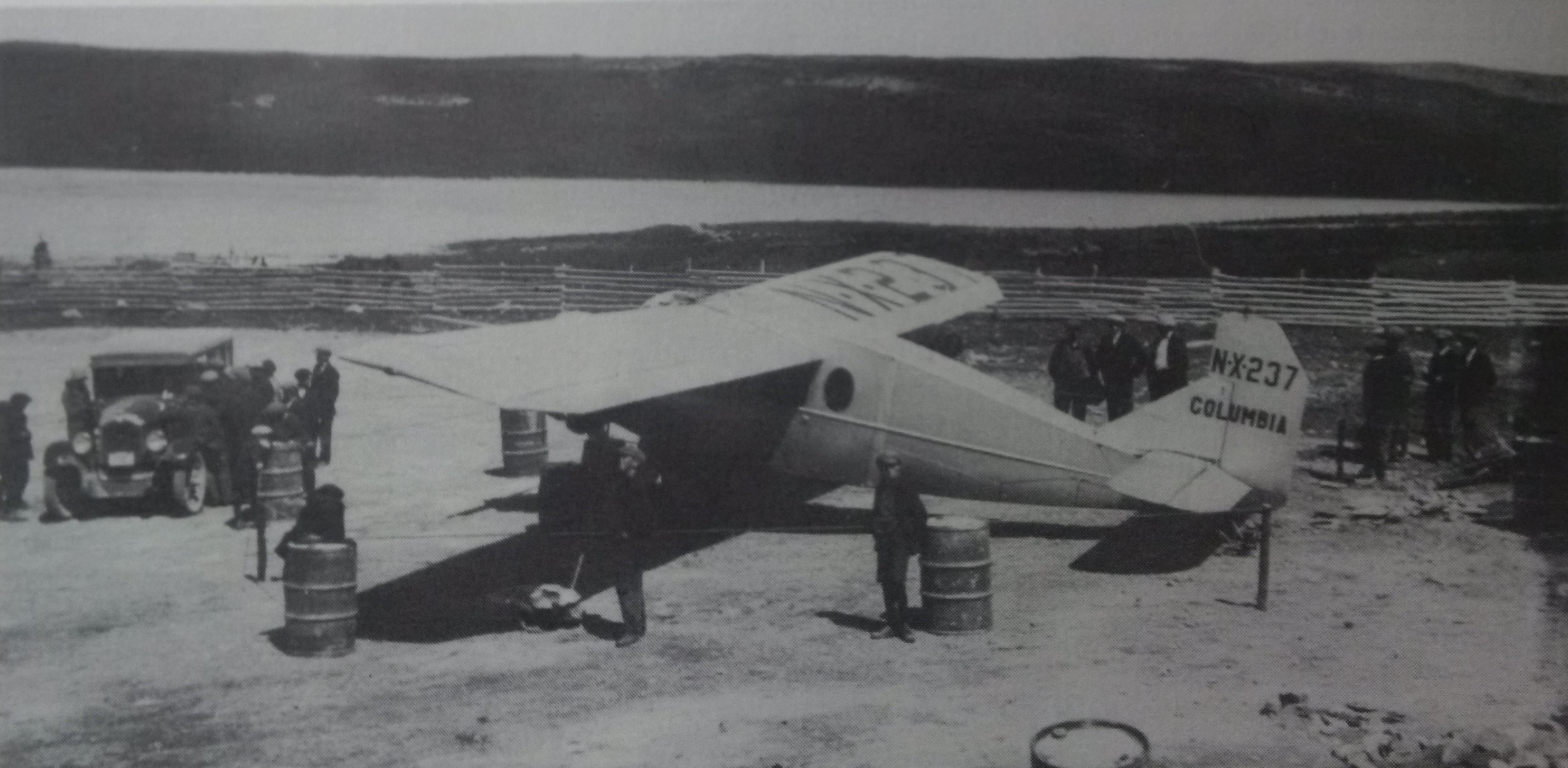
Boyd and Conners with the Columbia in Harbour Grace in September 1930. Parsons and Bowman 1983, 66.

Boyd and Conners with the Columbia in Harbour Grace in September 1930. Parsons and Bowman 1983, 66.

On September 28th [1930] they [Captain Errol Boyd of the Royal Air Force and Lieutenant Harry P. Connor of the U.S. Naval Reserve in the monoplane The Columbia] flew low over St. John’s and dropped a message in a cigarette can. The message, addressed to J.M. Barbour, Superintendent of the Anglo-American telegraph company, was picked up by a young man named Kent who delivered it to Barbour. The message read: “Saying hello to everybody in St. John’s. Sorry we can’t land. Bet there are some beautiful girls there! Many thanks for your cooperation on this flight. Boyd and Connors” (65-6).
51Heo0Oi52L._SY422_BO1,204,203,200_

The most prominent thing about The Challenge of the Atlantic: A Photo-illustrated History of Early Aviation in Harbour Grace, Newfoundland by Bill Parsons and Bill Bowman are the beautiful pictures of Harbour Grace. After this, are the wonderfully personal stories associated with the history of the aircraft that stopped in Harbour Grace. The pictures were taken by Reuben and Bill Parsons, and between them, they captured some of the most important aviation moments in Harbour Grace’s history, and everyday life in the town. The pictures of Harbour Grace put the airfield within the context of the community; a town that is one of the oldest in Newfoundland, has a rich fishing, shipping and ship building history, and even served as the capitol of Newfoundland for a period. With such a varied history, it seems reasonable that Harbour Grace would expand their view and form the Harbour Grace Airport Trust Company in 1927.
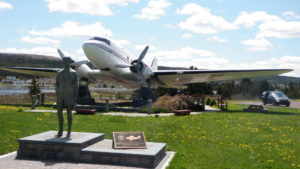
The Pride of Harbour Grace aviation monument. Photo by author 2010.

The Spirit of Harbour Grace aviation monument. Photo by author 2012. This DC-3 was the last one flown by Royal Cooper.

The interest in aviation was perhaps sparked by the Atlantic Air Race as one of the crews planning to attempt the crossing, lead by Rear Admiral Sir Mark Kerr, set up in Harbour Grace. The airstrip for the attempt was located where St. Francis High School now stands and ran parallel with Water Street, between the railway and the harbour. Kerr’s Handley Page Atlantic never attempted the crossing from Harbour Grace, but did make a test flight to St. John’s in 25 minutes. Before the attempt could be made, Alcock and Whitten-Brown made their successful crossing and the crew of the Handley Page decided to make an attempt from New York instead of Harbour Grace. It never made that attempt either.
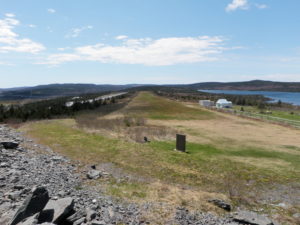
Harbour Grace Airfield. Photo by author 2010.

Harbour Grace Airfield. Photo by author 2010.

The airstrip was constructed through the financing of the 21 member committee, a grant from the Newfoundland Government, and with the help of T.A. Hall (government engineer who was also involved in determining the location of the Gander Airport) and R.H.K. Cochius (available from the Highroads Commission for technical advice). The airstrip took only a month to build, and is located near Lady Lake, to the south of Harbour Grace. According to the crew of The Pride of Detroit, the airstrip was one of the finest they had ever seen. Mabel Boll, who was in Harbour Grace in an attempt to be the first woman to cross the Atlantic (Amelia Earhart left Trepassey on a successful flight two days after Boll’s arrival in Newfoundland), donated $500 to the president of the airport toward further development “of what was considered to be a thoroughly efficient airport service” (42).
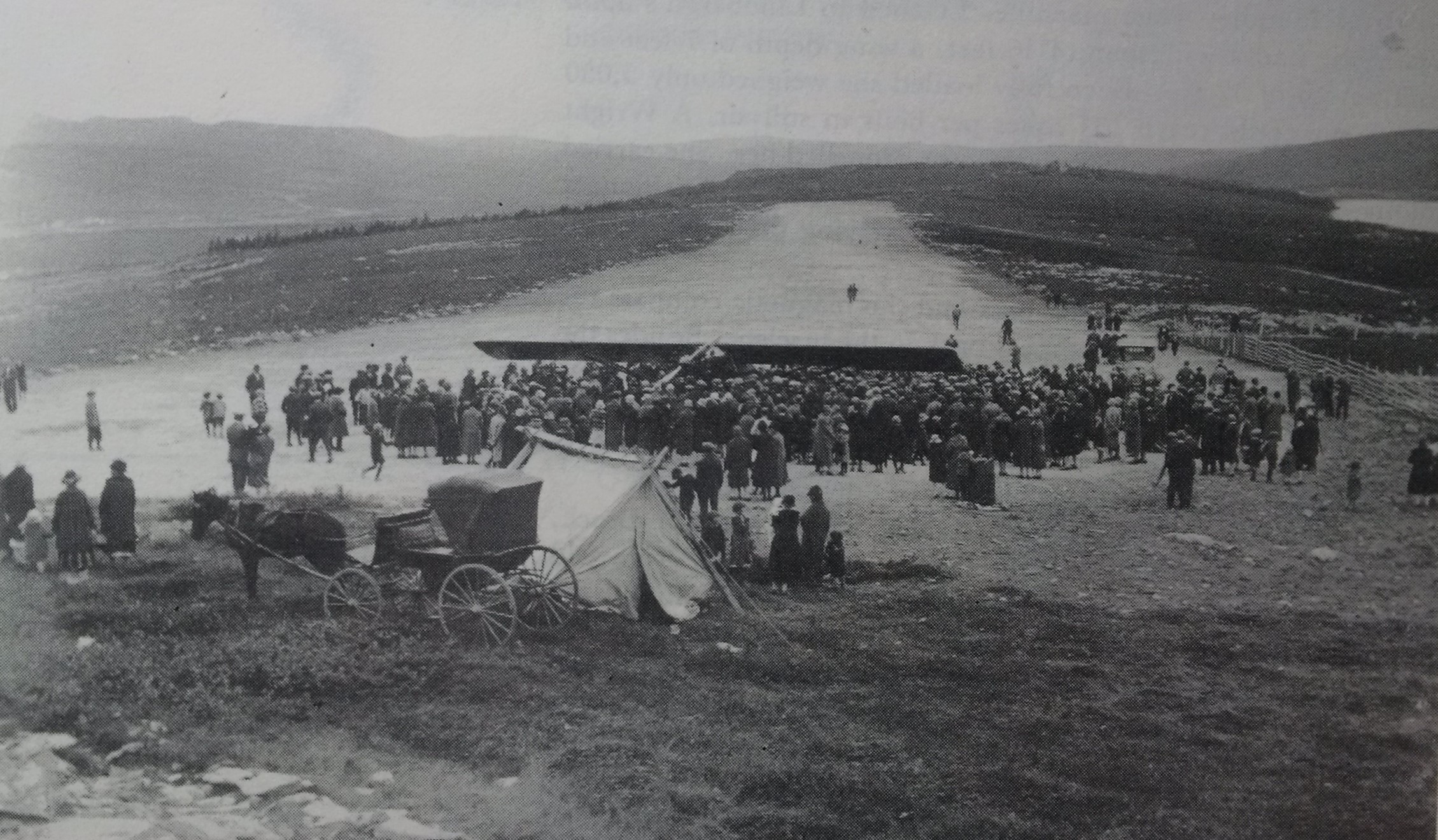
The Pride of Detroit, the first aircraft to use the Harbour Grace Runway, landing on 26 August 1927. Parsons and Bowman 1983, 24.

The Pride of Detroit, the first aircraft to use the Harbour Grace airstrip, landing on 26 August 1927. Parsons and Bowman 1983, 24.

After the above history about the airstrip, the book focuses on the individual aviators (and aircraft) that passed through Harbour Grace. The histories talk about failed and successful trans-Atlantic crossing (sometimes attempts at around the world flights). In 1927 alone, some twenty trans-oceanic flyers had been lost leaving North America to cross the Atlantic (27). Each section talks about the aircraft, the aviators, and their fate as they leave Newfoundland (whether they were successful in their attempt, did not attempt and where they went after Harbour Grace), and other interesting notes of history. Inside this book is a great deal of information, coupled with beautiful and rare pictures.

Wiley Post and Harold Gatty with the Winnie Mae in Harbour Grace on 23 June 1931. Parsons and Bowman 1983, 72.

Wiley Post and Harold Gatty with the Winnie Mae in Harbour Grace on 23 June 1931. Parsons and Bowman 1983, 72. Wiley Post is a well-know Alberta aviator, and is prominently featured in the Alberta Aviation Museum.

My biggest complaint with this book is the lack of captions on the pictures. I don’t know which pictures were taken by Bill and which were taken by Reuben. Of course, the years on the pictures would give a good indication, but cannot be credited with certainty. As well, some of the pictures have locations and people identified, and others don’t. Of course, there are many pictures that clearly show the name of the aircraft in the picture, or a recognisable face, such as Amelia Earhart, but captions also help give quick points of reference instead of always needing to read the associated article for details such as the aircraft, pilot (and crew), and date.
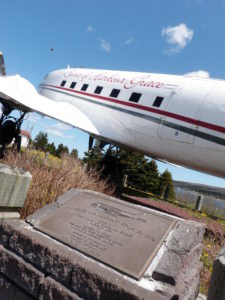
The Pride of Harbour Grace. Photo by author 2010.

The Spirit of Harbour Grace. Photo by author 2010.

Source

Parsons, B. and B. Bowman
1983      The Challenge of the Atlantic: A Photo-Illustrated History of Early Aviation in Harbour Grace, Nfld. Robinson-Blackmore Book Publishers: Newfoundland.
The full report for this Royal Air Force Ferry Command flight is not available. That said, two of the crew on board were members of the Royal Australian Air Force so there is crash information available in the file associated with the pilot P/O Ronald George Stanley Burrows (RAAF 1942).

Table 1: Crew list for RAF Hudson FK690. Adapted from Christie 1995 and RAAF 1942.

Name Rank Serial Number Service Duty
Burrows, Ronald George Stanley P/O 401898 RAAF Pilot
Simmons, Douglas Percy Charles Sgt. 1334966 RAF Pilot
Thomson, Graeme Hamilton P/O 656086 RAF Navigator
Fazel, Jack Eric Sgt. 405399 RAAF Radio Operator

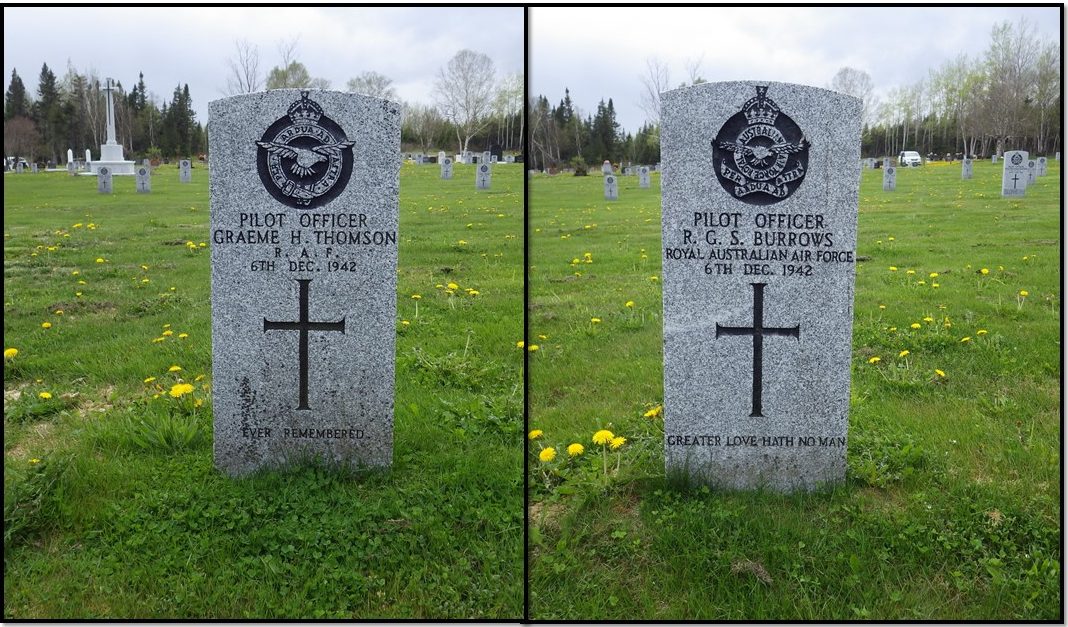
Ferry Command Hudson Mk. VI s/n FK 690 crashed on 6 December 1942 at 0351 GMT, one minute after takeoff. The aircraft was beginning a Ferry Command delivery flight to the United Kingdom, but stalled after takeoff, crashed and burned, killing all four crew on board (Table 1; Christie 1995; RAAF 1942). A funeral service was held at 1700 GMT and the victims were all buried in the Commonwealth War Graves in Gander on 7 December 1942 (Figure 1; RAAF 1942).

Figure 1: The graves of RAF P/O Graeme Hamilton Thomson and RAAF P/O Ronald George Stanley Burrows at the Commonwealth War Graves in Gander. Photo by author, 2014.

Figure 1: The graves of RAF P/O Graeme Hamilton Thomson and RAAF P/O Ronald George Stanley Burrows at the Commonwealth War Graves in Gander. Photo by author, 2014.

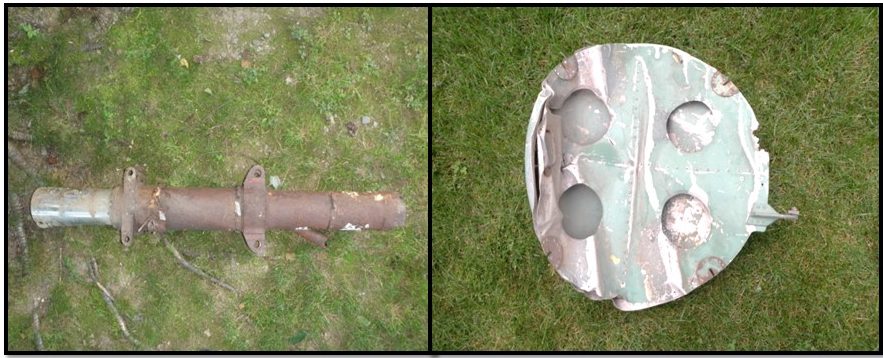
There is very little left to this site, mostly due to the fact that the Trans-Canada Highway was planned to pass over the wreckage. As such, people from Gander were encouraged to visit the site and take pieces of the aircraft as souvenirs or scrap. Some of these pieces are still in the possession of people around Gander, and some were kind enough to allow me to photograph what they had (figure 2).

Figure 2: The hydraulic and tank cover collected my Mr. Connors of Gander when highway construction threated the crash site. Photo by author, 2010.

Figure 2: The hydraulic and tank cover collected my Mr. Connors of Gander when highway construction threated the crash site. Photo by author, 2010.

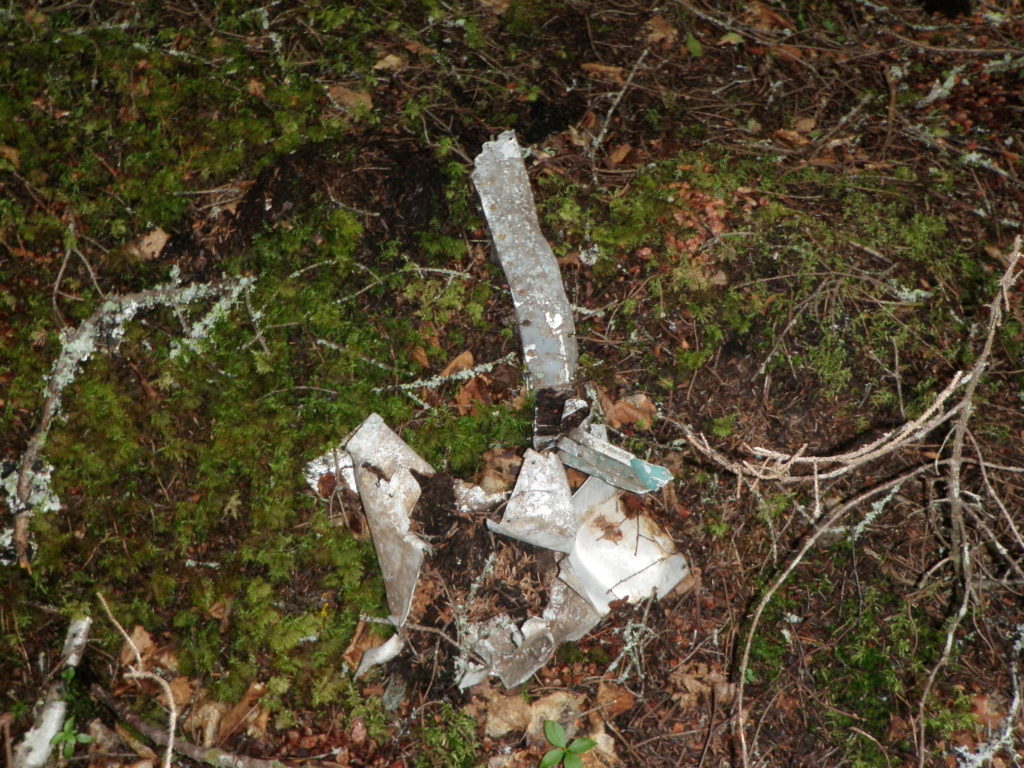
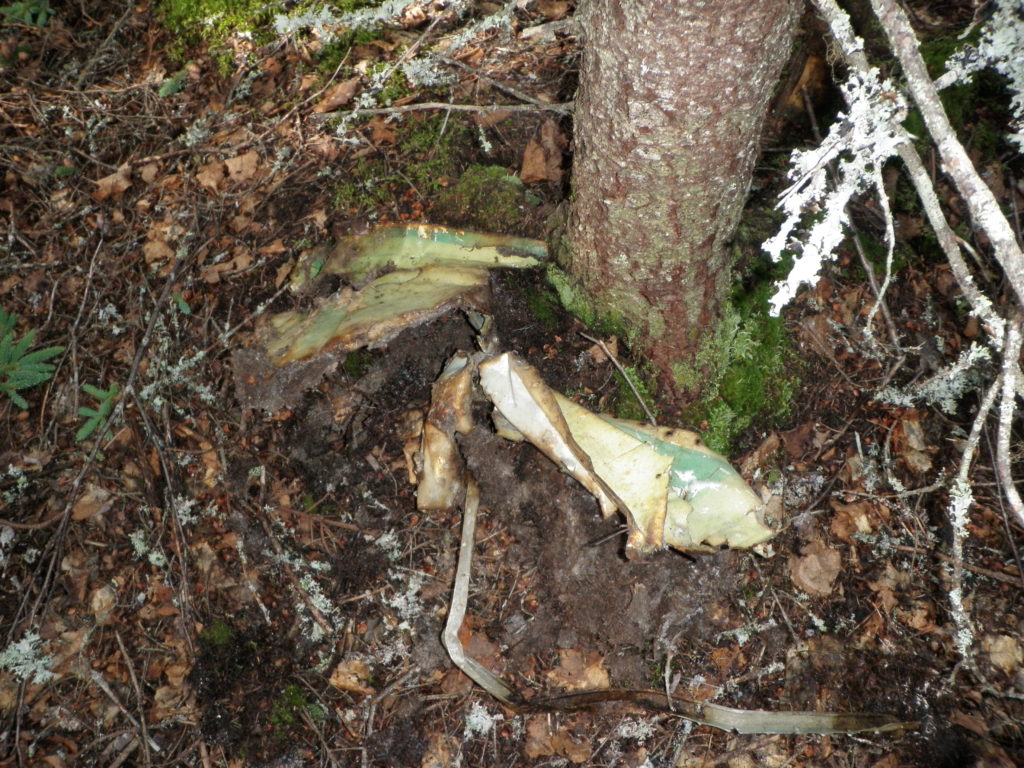
The highway did not pass directly over the site, but the road to the War Graves does potentially pass over some of the wreckage. When visiting this site, I was told that some pieces were on either side of the road, including a landing gear east of the road. Looking through thick alders, my team could not find the landing gear or any other evidence of wreckage east of the road, but did find some small pieces west of the road (figure 3). That is not to say that the landing gear isn’t still on the site, just that I could not find it.

Figure 3: Some of the wreckage that remains on site. Photo by author, 2010.

Figure 3: Some of the wreckage that remains on site. Photo by author, 2010.

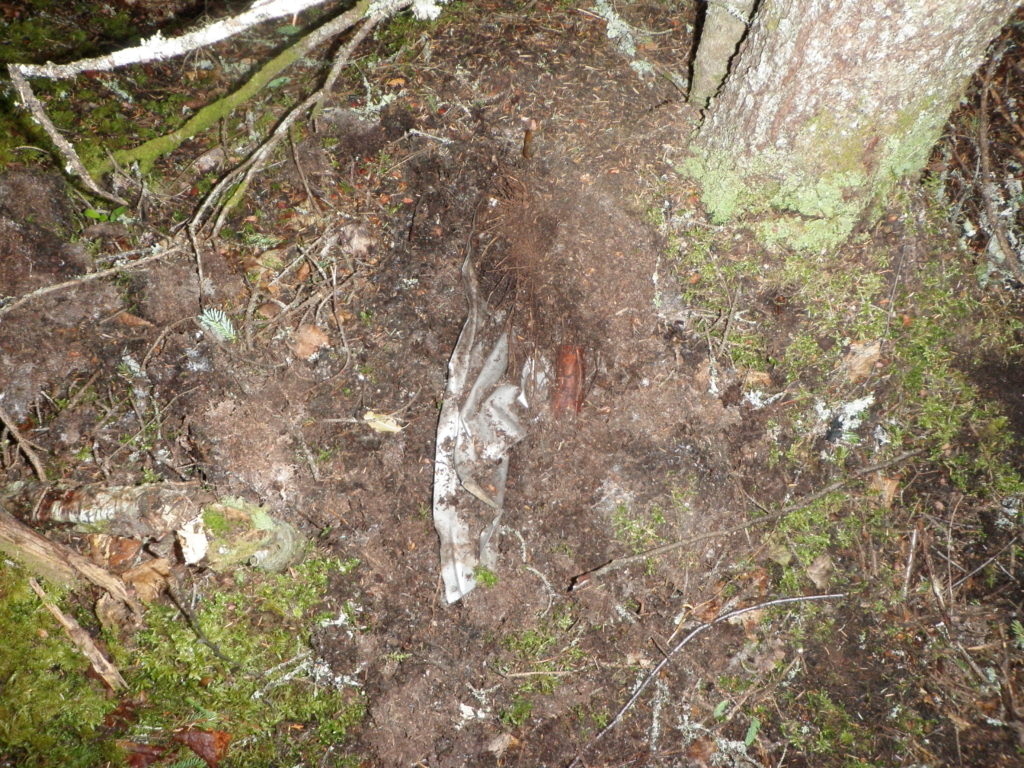
My team also used a metal detector to see if there was much under the surface of the area. Only a couple of small pieces were found and positively identified as aircraft wreckage. Some of the hits closer to the highway were simply litter (figure 4).

Figure 4: With the use of a metal detector, more aircraft fragments were uncovered in 2011. Photo by author, 2011.

Figure 4: With the use of a metal detector, more aircraft fragments were uncovered in 2011. Photo by author, 2011.

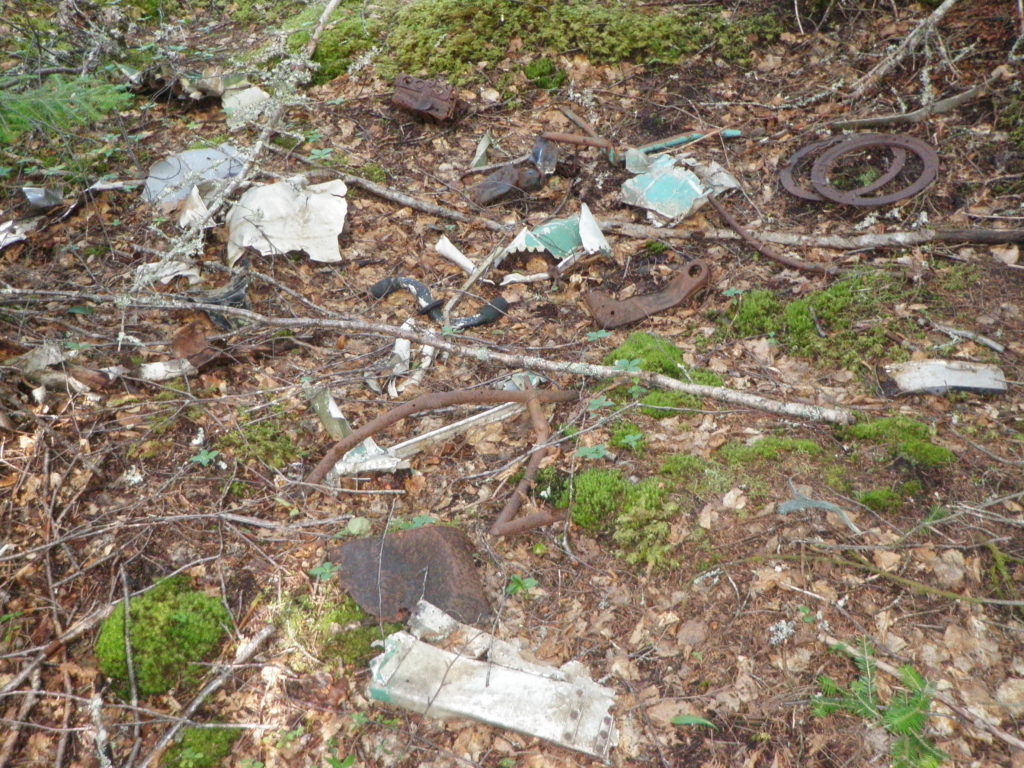
As there is so little left to this site, very little further information about the crash can be found through the analysis of the material culture. Also, how the objects were removed from the site is a little different from other sites. Sites that are stripped of scrap metal tend to be very distinct in what remains. Objects that are too heavy to transport, that are heavily rusted, or that contain materials that cannot be easily recycled in Newfoundland (like steel), tend to remain on site. Those pieces are also left in situ as there would have been no need to move them. But, as people were encourage to take whatever they found interesting, what remains are very small pieces that were potentially moved and gathered together in an effort to encourage their removal (figure 5).

Figure 5: Area of highest artifact concentration on the site. Photo by author, 2010.

Figure 5: Area of highest artifact concentration on the site. Photo by author, 2010.


Sources:

Bryan, C.
2010    Personal communication, Gander resident.

Christie, C. A.
1995    Ocean Bridge: The History of RAF Ferry Command. University of Toronto Press, Toronto.

Hillier, D.
2010    Personal communication, historian.

Leahy, D.
2012    Lockheed Hudson Mk. VI FK 690. RAAF Casualty Database, http://www.raafdb.com/ , accessed 10 May 2016.

RAAF (Royal Australian Air Force)
1942    4018988 F/O R.G.S. Burrows. Royal Australian Air Force, Canberra. On file, National Archives of Australia, A705 163/24/355.

Site wreckage

Site wreckage